
Costa Rican Culture 101: Traditions, Food, and Pura Vida Explained
There is a moment that happens to almost every visitor to Costa Rica, usually within the first day or two. Someone, a waiter, a taxi driver, a stranger on the street, smiles and says “pura vida,” and you find yourself smiling back before you’ve even fully processed what it means. By the end of the trip, you’re saying it too, without quite remembering when you started.
That small moment captures something larger about Costa Rican culture: it doesn’t announce itself loudly. It welcomes you in, gradually, until you realize you’ve absorbed a little piece of it.
If you’re planning a visit, or simply curious about what makes this small Central American country so distinct, here’s a real introduction to the traditions, food, and philosophy that define daily life in Costa Rica.
What Does Pura Vida Actually Mean?
Literally translated, pura vida means “pure life.” But translating the phrase is the easy part. Understanding it is something else entirely.
Costa Ricans use pura vida constantly, and for almost everything. It’s a greeting (“Hello, how are you?”). It’s an answer (“I’m doing great”). It’s a way of saying goodbye, of expressing gratitude, of brushing off a minor inconvenience, or of describing something as good or beautiful. Ask someone how their day is going, and “pura vida” might be the entire response and somehow, it says everything.
But beyond its everyday usage, pura vida reflects a genuine national outlook: a relaxed, grateful, present-focused way of moving through life. It shows up in how Costa Ricans handle traffic delays, in how unhurried conversations tend to be, and in the country’s consistent ranking as one of the happiest places on earth, despite not being one of the wealthiest. Costa Rica regularly outperforms far richer nations in global happiness indexes, and locals will tell you pura vida is a large part of why.
It isn’t naive optimism. It’s a deliberate choice to prioritize wellbeing, community, and gratitude over stress and material accumulation. Spend a week in Costa Rica, and you start to understand why so many visitors leave saying the trip changed how they think about daily life back home.
A Nation Without an Army, and What That Reveals
One of the most telling facts about Costa Rica’s national character is something the country doesn’t have: a military. In 1948, Costa Rica formally abolished its armed forces, redirecting those resources toward education, healthcare, and environmental protection instead.
This decision, made over 75 years ago, still shapes the national identity today. Costa Rica consistently invests heavily in public education and conservation, and the result is a population that is unusually well-educated and deeply connected to its natural environment. It’s not a coincidence that this is also one of the most biodiverse countries on the planet, home to roughly 5% of the world’s species despite covering just 0.03% of the earth’s surface. The choice to invest in people and nature, rather than weapons, runs through nearly every aspect of Costa Rican culture, from its world-renowned national park system to its emphasis on sustainability in everyday life.
Family, Community, and the Rhythm of Daily Life
Costa Rican culture places enormous value on family and community connection. Multi-generational households are common, Sunday family gatherings are something of a sacred ritual, and there’s a strong cultural emphasis on knowing your neighbors rather than simply living near them.
This sense of community extends to how Costa Ricans, often called Ticos and Ticas, treat visitors. Hospitality here doesn’t feel performative or transactional. It feels like an extension of how people already treat one another. Don’t be surprised if a local goes out of their way to walk you to a destination instead of just pointing, or if a brief interaction turns into a ten-minute conversation about your trip, your family, and theirs.
Life also tends to move at a different pace here, often summarized by the phrase “Tico time“: a gentle acknowledgment that schedules are more like suggestions, and that punctuality takes a back seat to genuine connection. For visitors used to fast-paced itineraries, it’s a useful cultural adjustment, and usually a welcome one.
The Food: Simple Ingredients, Deep Tradition
Costa Rican cuisine isn’t built on heavy spice or elaborate technique. It’s built on freshness, simplicity, and ingredients that have been part of daily life for generations.
Gallo Pinto is the unofficial national dish, and quite possibly the most important meal in the country. A flavorful mix of rice and beans, typically seasoned with onion, peppers, cilantro, and a tangy local sauce called Salsa Lizano, gallo pinto appears on breakfast tables across Costa Rica every single day. Pair it with eggs, fried plantain, and a few slices of local cheese, and you have what most Ticos would call a proper breakfast.
Casado, meaning “married man,” is the quintessential Costa Rican lunch: a hearty plate combining rice, beans, salad, fried plantain, and a protein of your choice, usually chicken, beef, fish, or pork. The name comes from the idea that this is the well-rounded, balanced meal a wife would traditionally prepare for her husband, and today it remains the most common lunch order at local sodas (small, family-run restaurants) throughout the country.
Coffee deserves its own mention entirely. Costa Rica’s volcanic soil and high-altitude growing regions produce some of the most sought-after coffee in the world, and coffee culture here runs deep, both economically and socially. Traditional preparation often uses a chorreador, a wooden stand holding a cloth filter through which hot water is poured directly over the grounds. It’s a slower method than your average drip machine, and that’s rather the point. Many Costa Rican families have multi-generational ties to coffee farming, and a visit to a coffee plantation remains one of the most culturally rich experiences available to travelers.
Round things out with fresh tropical fruit available nearly everywhere, tamales during the December holidays, and arroz con leche for dessert, and you start to understand Costa Rican food as what it really is: comfort food rooted in family tradition, not flash.
Traditions, Celebrations, and National Pride
Costa Ricans celebrate with genuine enthusiasm, and several traditions stand out as windows into the national character.
Independence Day, celebrated on September 15th, is one of the most beloved holidays of the year. Children march in school parades carrying handmade lanterns called faroles, and the streets fill with marching bands, traditional dance, and an unmistakable sense of national pride. It’s one of the best times to witness Costa Rican culture in its most expressive form.
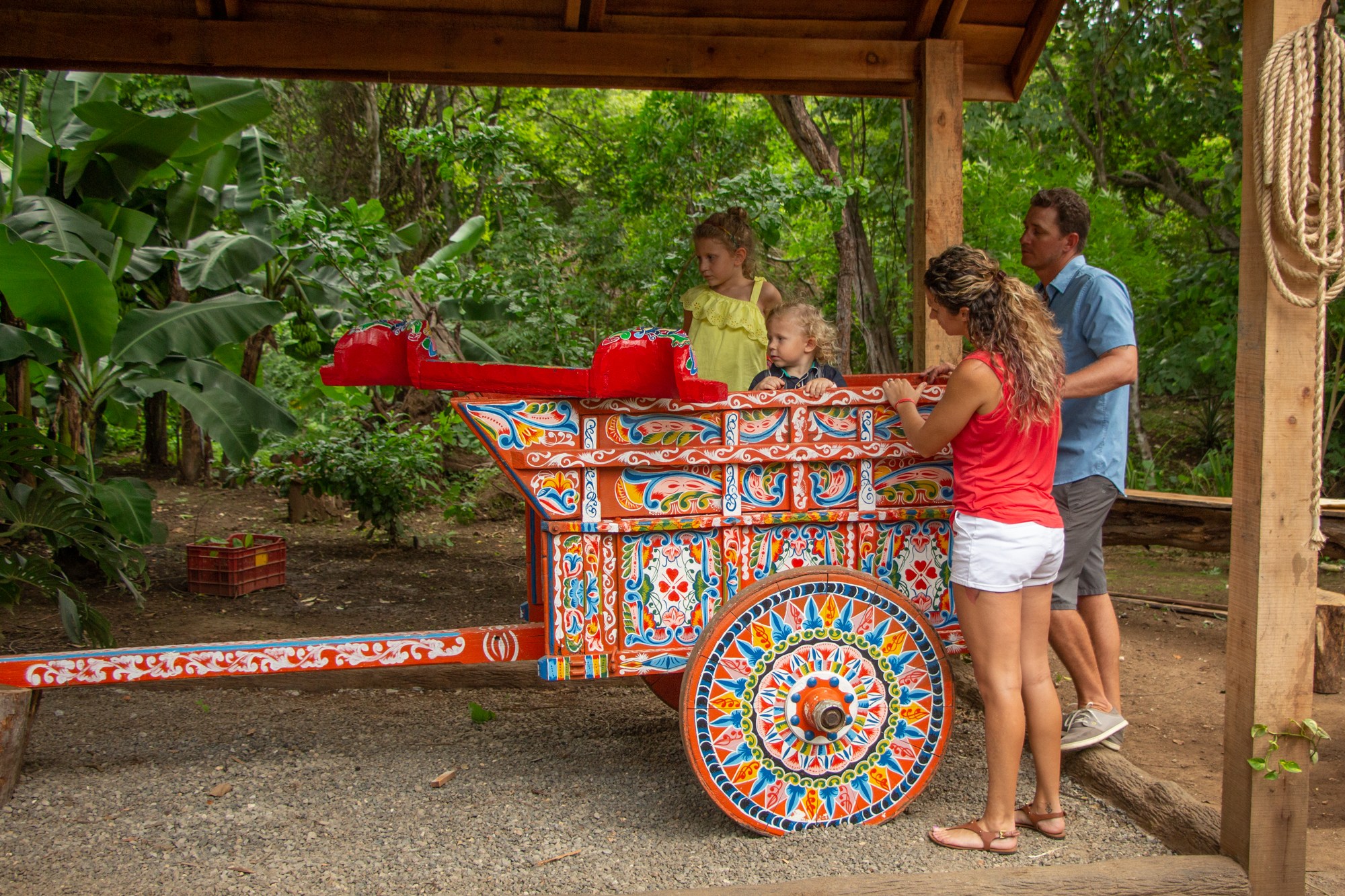
Día de los Boyeros (Day of the Oxcart Drivers) celebrates one of Costa Rica’s most iconic cultural symbols: the brightly painted oxcart, or carreta. Once essential for transporting coffee from mountain farms to coastal ports, these elaborately decorated carts have become a UNESCO-recognized symbol of Costa Rican heritage, and you’ll spot their distinctive geometric patterns on everything from souvenirs to murals throughout the country.
Holy Week (Semana Santa) is deeply observed across the country, with processions, religious ceremonies, and family gatherings marking the days leading up to Easter. It’s also one of the most popular travel weeks for Costa Ricans themselves, so visitors should expect a livelier, more festive atmosphere in beach towns during this period.
And then there’s the simple, daily tradition that connects nearly every other one on this list: gathering. Whether it’s a holiday, a Sunday lunch, or just an ordinary Tuesday evening, Costa Ricans tend to find their way back to one consistent value: being together.
Why Understanding the Culture Makes the Trip Better
It’s entirely possible to visit Costa Rica and experience only the beaches, the zip lines, and the wildlife, and still have an unforgettable trip. But travelers who take a little time to understand the culture (the meaning behind pura vida, the value placed on family and conservation, the pride behind a plate of gallo pinto) tend to come away with something deeper than great photos.
They come away understanding why locals smile so easily, why the pace of life feels different, and why so many visitors find themselves already planning a return trip before they’ve even left.
Costa Rica isn’t just a destination. It’s a way of looking at life. And once you’ve experienced even a little of it, pura vida stops being a phrase you heard on vacation, and starts being something you genuinely understand.