How High and How Fast? The Real Numbers Behind Costa Rica’s Best Zip Lines
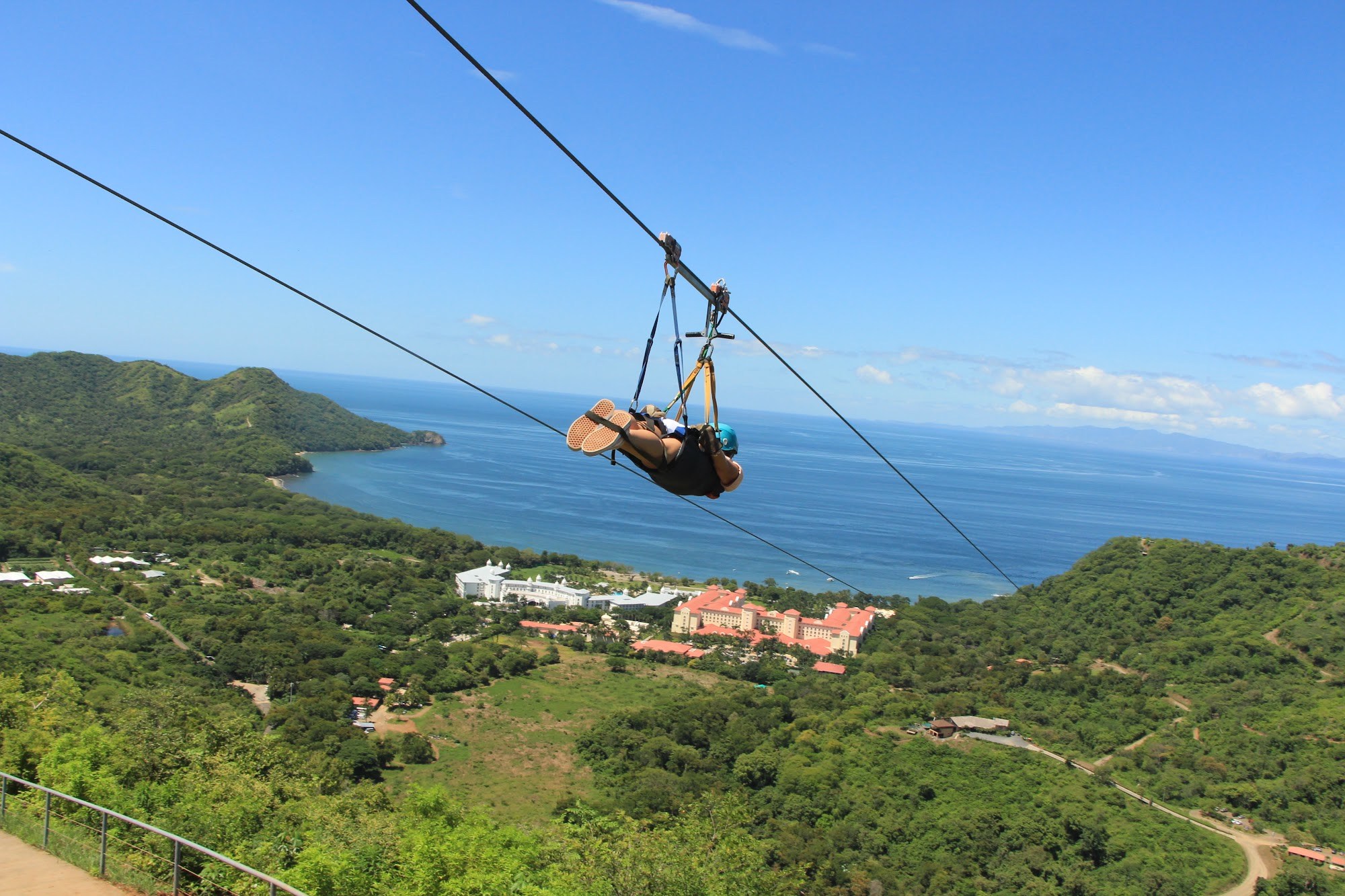
If you’ve ever stood at the edge of a zip line platform, heart pounding, staring out at a stretch of jungle canopy that seems to fall away forever beneath you, you know the feeling. It’s part excitement, part awe, and maybe a small, entirely reasonable part of you wondering: exactly how high up am I right now, and how fast is this thing going to go?
You’re not alone. Those are the questions almost every first-timer (and plenty of experienced riders) asks before booking. And they’re smart questions, because understanding the real numbers behind zip lining doesn’t make the experience less thrilling: it actually makes it better. When you know what to expect, you can stop bracing for the unknown and start actually enjoying the ride.
So let’s talk numbers. Heights, speeds, cable lengths, and everything else you were curious about but weren’t sure how to ask.
First, Why Do People Actually Want to Know?
There’s a common assumption that looking up stats before a zip line tour is something only anxious or hesitant riders do. The reality is almost the opposite.
Curious, prepared travelers ask these questions because they want to understand what they’re signing up for, make good decisions for their family, know whether a particular tour is right for their comfort level, and simply appreciate the engineering and scale of what they’re about to experience.
Understanding the numbers transforms a zip line from “a scary thing I did” into “an extraordinary feat of engineering I participated in.” That shift in framing, from passive passenger to informed adventurer, makes the whole experience richer.
The Basics: What the Numbers Actually Mean
Before diving into Costa Rica’s specifics, a quick primer on what the key stats actually tell you.
Cable length is the total distance the zip line travels from one platform to the next. Longer lines mean more time in the air, more scenery, and often higher speeds as gravity does more work over a greater distance. Some of Costa Rica’s top lines stretch well over a kilometer, long enough that you have time to stop gripping the handle and actually look around.
Height refers to how far above the ground the cable sits at its highest point, which is usually somewhere in the middle of the run rather than at the launch platform. In Costa Rica, many zip lines run above dense rainforest and jungle canopy, which creates a visual effect that’s actually more awe-inspiring than vertiginous: you’re soaring over a sea of green rather than staring down at a hard floor.
Speed varies significantly depending on cable length, the angle of descent, your body weight, and wind conditions. Most zip lines in Costa Rica fall between 40 and 80 kilometers per hour (roughly 25 to 50 mph) for average-weight riders, though certain specialized lines push closer to and beyond that range.
Platform height describes the elevation of the launch tower itself: how high you climb before stepping off. This is often the number that feels most dramatic in the moment, though it’s worth noting that most platforms are designed so that you’re stepping outward rather than downward, which changes the psychological experience considerably.
What Makes Costa Rica’s Zip Lines Different
Costa Rica didn’t invent zip lining, but it perfected it as a tourism experience, and the geography is the main reason why.
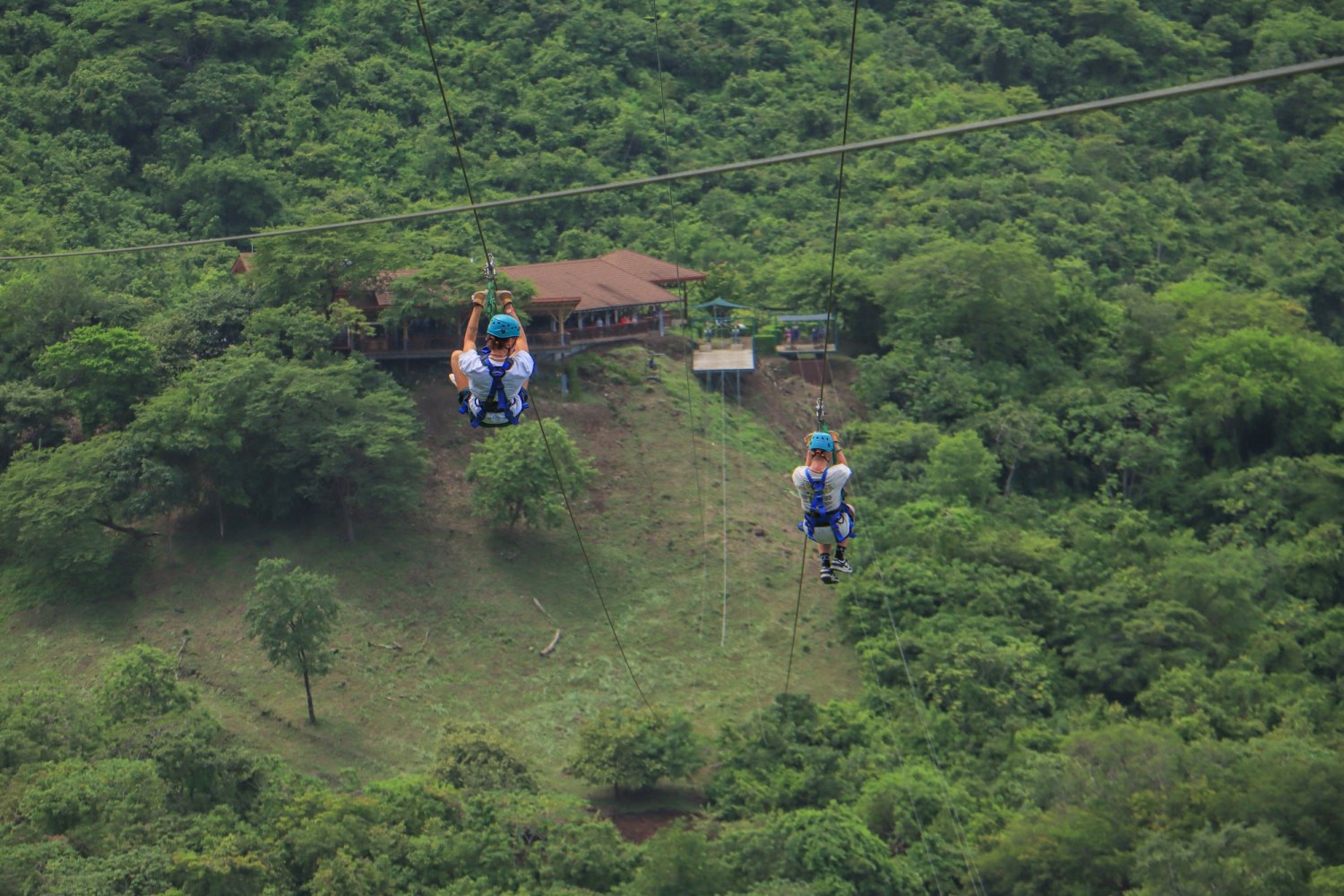
The country’s volcanic mountain ranges, dense tropical forests, and dramatic coastal drops create natural corridors that zip line engineers dream about. You’re not riding above a ski slope or an empty field. You’re flying over active, living rainforest, often with ocean visible in the distance, wildlife moving through the canopy below, and a landscape that shifts from jungle to mountain to coast across a single tour.
The altitude matters too. Many Costa Rican zip line parks operate at elevations between 500 and 1,500 meters above sea level, which means cooler temperatures, often-dramatic cloud effects at mid-line, and views that stretch across entire mountain ranges on clear days.
Top parks in Costa Rica typically offer anywhere from 8 to 15 individual zip lines across a single tour, with total cable distances ranging from 3 to 12 kilometers across a full circuit. Heights above the forest floor range from 30 meters on shorter runs to well over 100 meters on the most spectacular lines. A complete tour usually takes between two and three hours, combining zip lines with suspension bridges and guided hiking between platforms.
Safety Standards: The Numbers That Matter Most
Speed and height are exciting to talk about. But the numbers that serious travelers pay the most attention to, and that the best parks are most proud of, are the ones that don’t make it into the marketing brochures.
Load ratings (meaning how much total force a cable, anchor, and harness system is engineered to withstand) are the foundation of any reputable zip line operation. At top-tier parks in Costa Rica, every element of the system is rated to handle forces that dramatically exceed anything a real-world rider would ever generate.
ACCT certification is the benchmark most serious operators aim for. The Association for Challenge Course Technology sets internationally recognized standards for zip line design, construction, inspection, and operation. It covers everything from cable tension and anchor depth to braking systems and harness compatibility. Not every park in Costa Rica holds this certification, which is exactly why it matters when one does.
Harness connection points on modern systems typically involve multiple simultaneous connections rather than a single clip. Triple-point connection systems, where a rider is attached to the cable at three independent points at the same time, represent the current standard of care among premium operators.
Braking systems have evolved significantly in recent years. Hands-free automatic braking, where the rider doesn’t need to brake manually at all, is now available at leading parks and represents a meaningful safety and experience upgrade over older systems that rely on the rider applying friction with a gloved hand.
Diamante Eco Adventure Park: Where the Numbers Come Together
If you want to experience what happens when spectacular geography meets genuinely elite engineering, Diamante Eco Adventure Park on Costa Rica’s Pacific coast is where that conversation begins and ends.
Diamante’s signature experience is the Superman Zip Line, and the numbers here are genuinely extraordinary.
Nearly a Mile of Open Sky
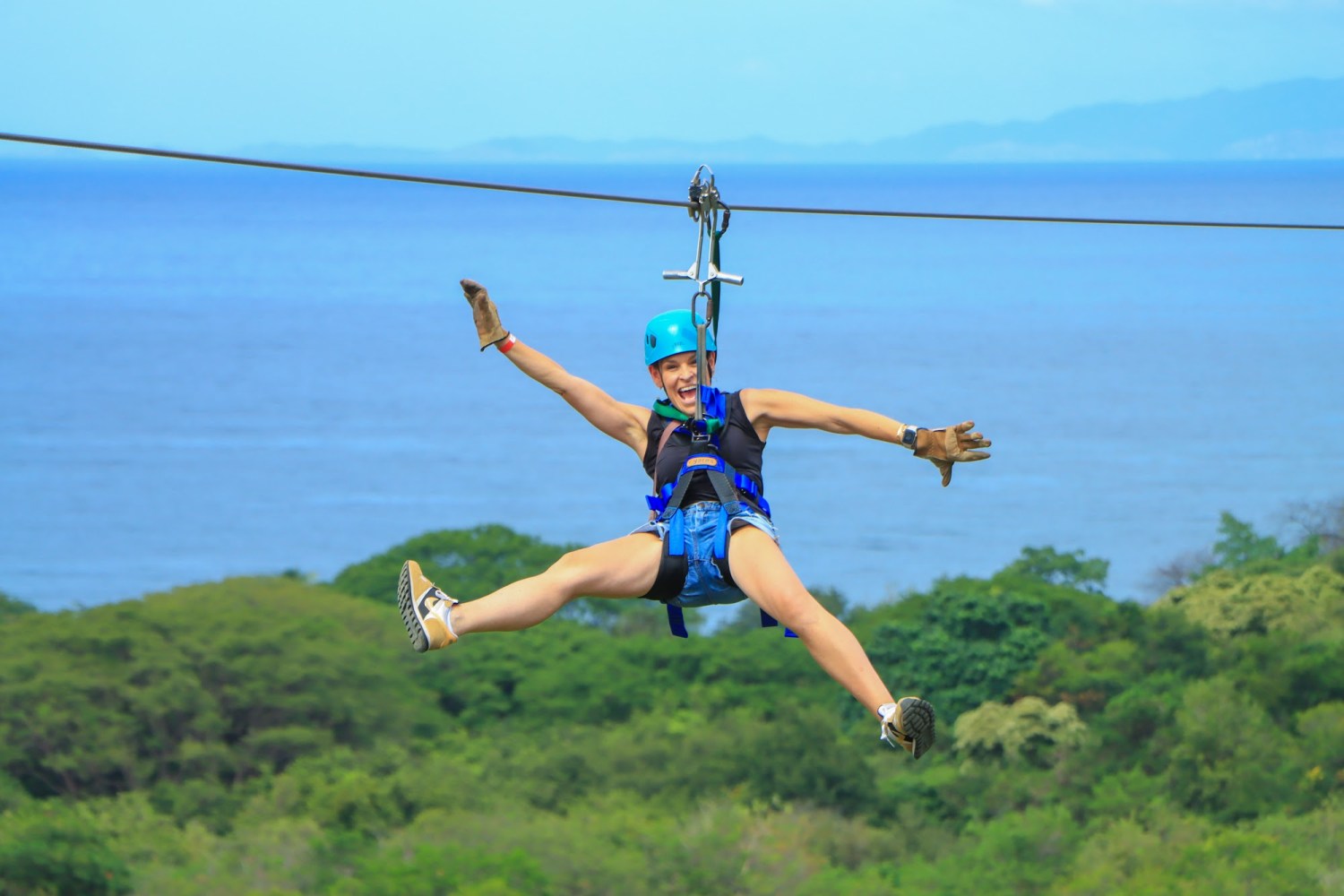
At close to one mile in total length, Diamante’s Superman line is among the longest zip line experiences available anywhere in Costa Rica. That isn’t a marketing exaggeration: it’s a cable length that translates directly into flight time, into scenery, and into the particular sensation of realizing you’ve been in the air long enough to truly exhale, look around, and take it all in.
The line runs above a landscape where jungle canopy meets Pacific Ocean horizon, a combination of views that most travelers describe as simply unlike anything else they’ve experienced. At mid-line, you’re suspended above a panorama that stretches from dense tropical forest to open ocean, the kind of perspective that doesn’t exist from the ground, from a car, or even from most aircraft.
Fly Together: Dual Cable Design
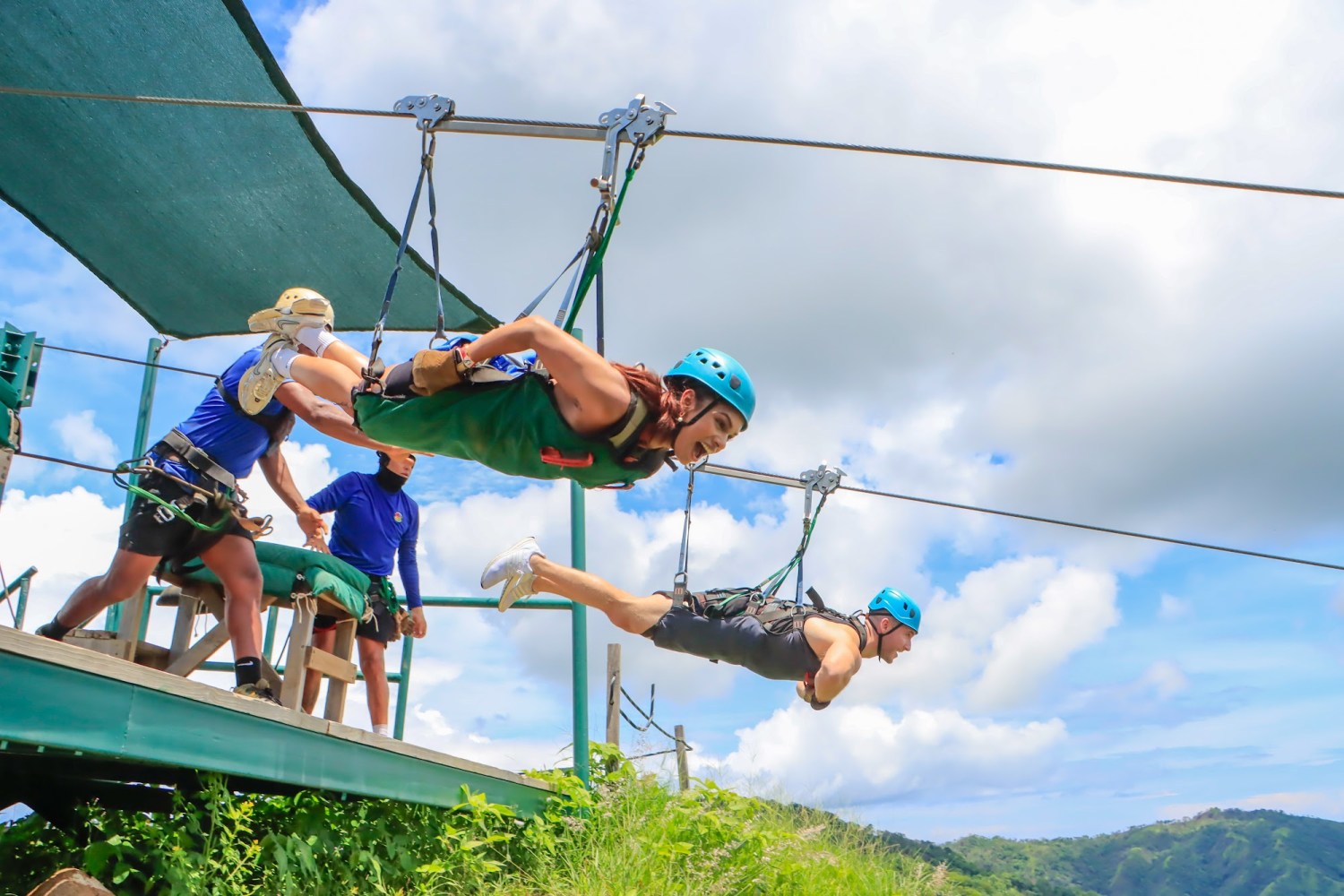
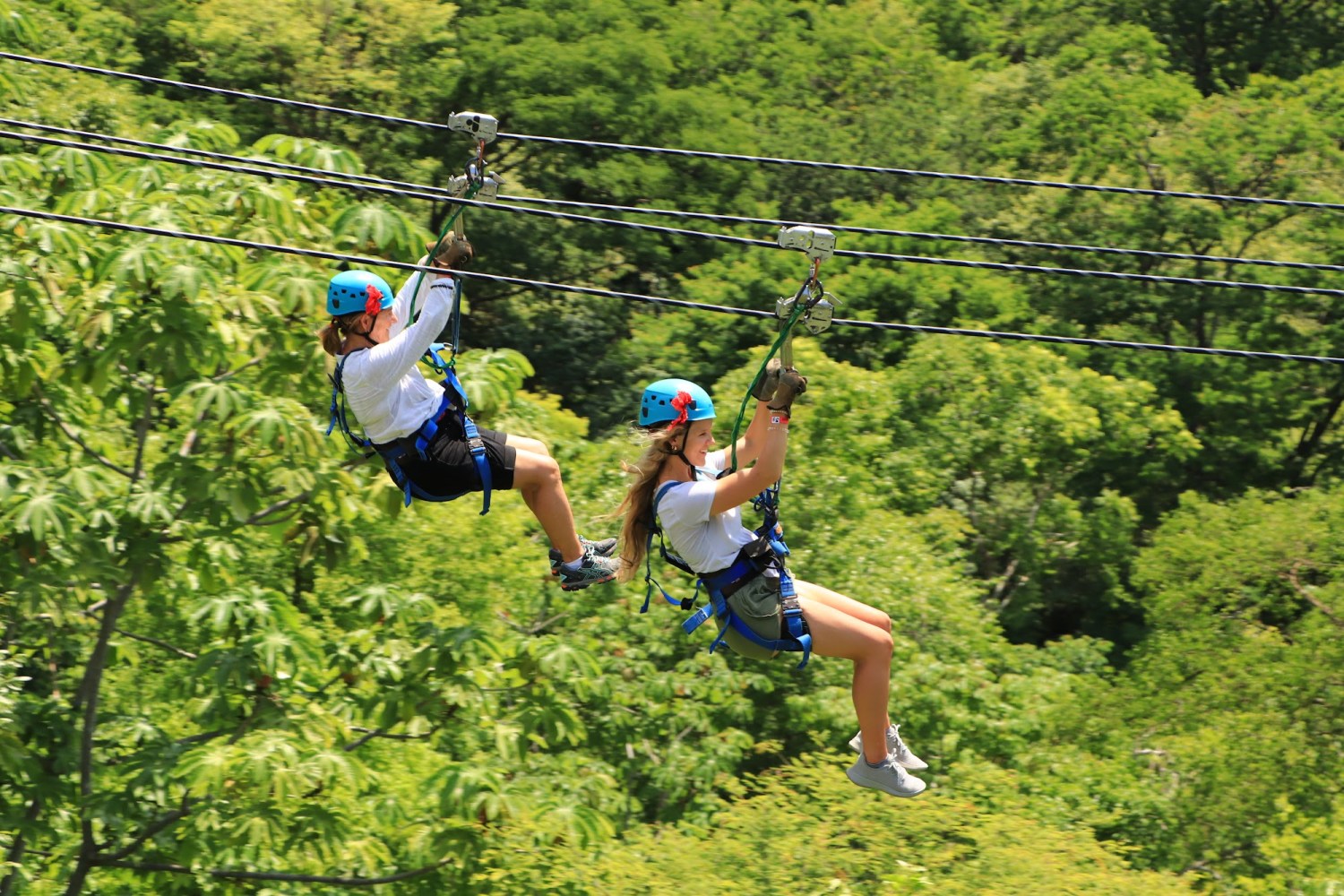
One of Diamante’s most distinctive features is its dual cable system, which allows two riders to fly simultaneously, side by side on parallel lines. This isn’t just a logistical convenience: it fundamentally changes the emotional experience of the zip line.
Flying alongside a friend, a partner, a sibling, or your child transforms a solo thrill into a shared one. You can watch each other’s reactions, lock eyes at mid-flight, and arrive at the same platform at the same moment to celebrate together. For families especially, this is the kind of detail that turns a great activity into a memory that genuinely sticks.
The Quick Jump: 30 Feet of Pure Freefall
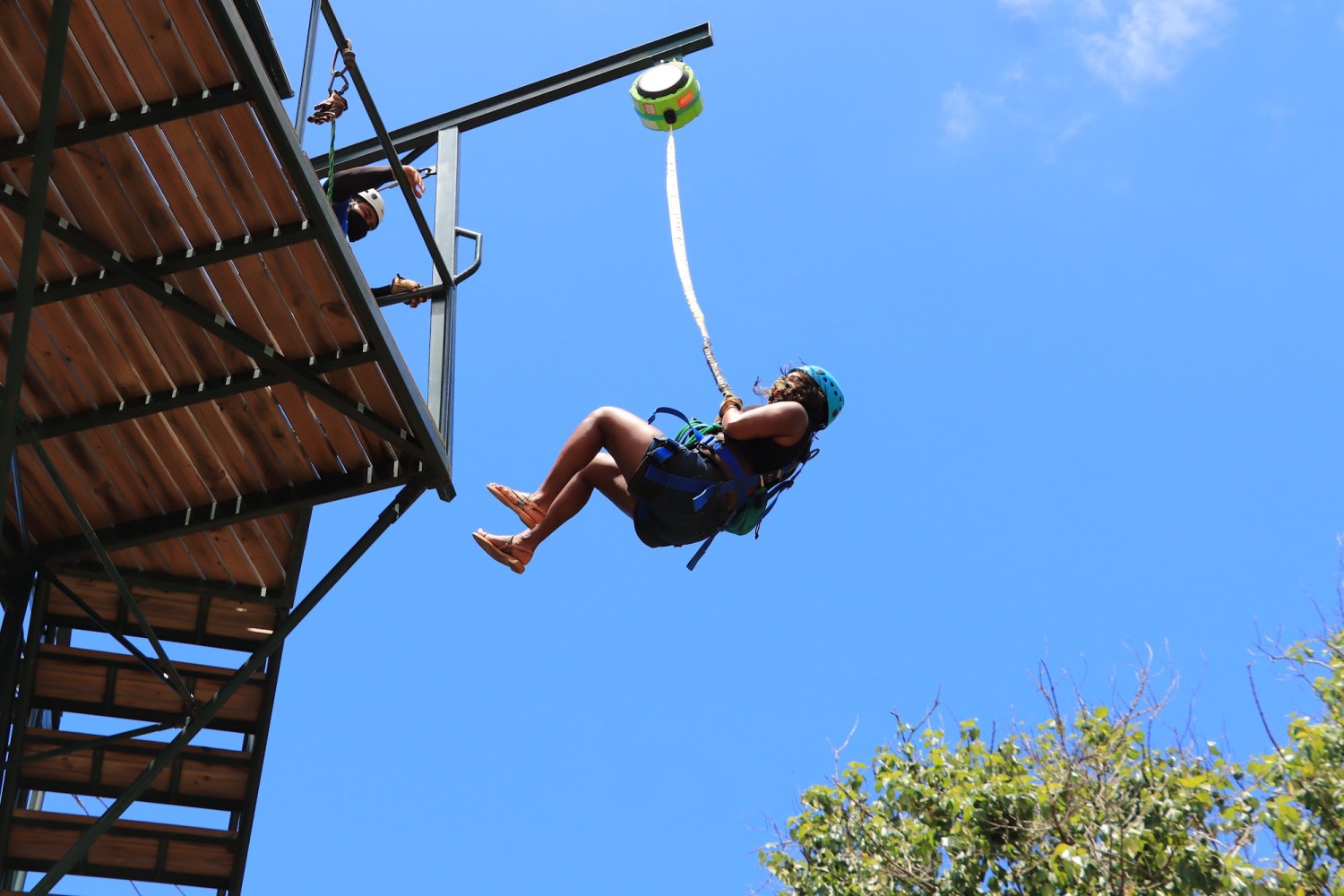
For those who want to add a dimension of pure vertical thrill to the experience, Diamante offers the Quick Jump, a controlled 30-foot free-fall style drop that precedes the zip line run.
Thirty feet is approximately three stories. It happens very fast and is over before your brain fully registers it’s begun, which is more or less the entire point. It is safe, contained, and structured, and for guests who’ve done it, usually the first thing they mention when describing the experience to someone who hasn’t.
Hands-Free Automatic Braking
Diamante’s Superman line uses a hands-free automatic braking system, meaning you arrive at the landing platform smoothly and without any action required from you. There’s no manual friction brake, no gloved hand pressed against a cable, no need to remember a technique you learned on the ground five minutes ago while you’re traveling at speed above a jungle.
This is a genuine advancement over older zip line braking methods, and its value is both practical and experiential. Practically, it removes a variable from the safety equation. Experientially, it means your hands are free, your mind is clear, and the only thing left to do for the duration of the flight is enjoy it.
ACCT-Certified Standards
Diamante’s zip line operation is built to ACCT (Association for Challenge Course Technology) standards, the internationally recognized benchmark for design, construction, equipment, and operation. This certification isn’t self-reported. It reflects independent verification that every element of the system meets or exceeds established international criteria for safety and performance.
Combined with Diamante’s own engineering standards (equipment designed to withstand up to 4 metric tons and triple-point harness connection systems that keep every rider attached at three independent points simultaneously), the result is an operation where safety is not a department. It’s the infrastructure everything else is built on.
Bilingual Certified Guides
Every experience at Diamante is led by bilingual certified guides who manage safety, explain the equipment, set expectations, and ensure that every guest, regardless of their experience level or first language, feels informed, comfortable, and cared for from the first briefing to the final landing.
This matters more than many visitors realize when booking. A zip line guide isn’t just a person who clips you in. They read guests, adjust their communication, spot nervousness before it becomes a problem, and make real-time decisions that shape the experience for everyone on the platform. Bilingual certification means no guest is ever navigating a safety briefing in a language they don’t fully understand.
What to Expect on the Day: A Quick Practical Guide
Knowing the numbers is step one. Knowing what to expect on the actual day makes everything smoother.
Wear comfortable, close-fitting clothing. Loose layers can get caught in equipment. Athletic wear or comfortable shorts and a t-shirt work well. Closed-toe shoes are required on most tours; sandals and flip-flops aren’t appropriate.
Leave the jewelry at the hotel. Rings, bracelets, and necklaces can catch on equipment or cause discomfort in a harness.
Listen to the safety briefing. Even if you’ve done zip lines before, this briefing is specific to this equipment, this terrain, and these guides. Guides notice when people are checked out, and it doesn’t set a great tone.
Tell your guide if you’re nervous. A good guide (and all of Diamante’s are) uses this information to support you better, not to make you feel self-conscious. The best zip line experiences often belong to guests who arrived nervous and were supported well.
Bring a camera or GoPro if you have one. Pockets should be secure, and phones should be stored away or in a tight chest pocket, not held. Diamante offers professional photos and video of the experience if you’d rather not manage your own.
The Bottom Line
Here’s what the numbers behind Costa Rica’s best zip lines actually tell you, when you step back and look at them honestly:
Long cables mean more time in the air and more views. Height means perspective you can’t get anywhere else. Dual lines mean the people you came with can be there with you. Automatic braking means your only job is to enjoy the flight. ACCT certification means someone independent has verified that the equipment meets global standards. And a nearly one-mile Superman line above the Pacific coast of Guanacaste means that, for approximately the length of time it takes to cross sixteen football fields in the air, Costa Rica’s most spectacular landscape belongs entirely to you.
The numbers are worth knowing. The experience is worth having.
Diamante Eco Adventure Park, Guanacaste, Costa Rica. Come see exactly how high. Come feel exactly how fast.