
Meet the Toucans of Diamante: Rescue, Enrichment and How to See Them Up Close
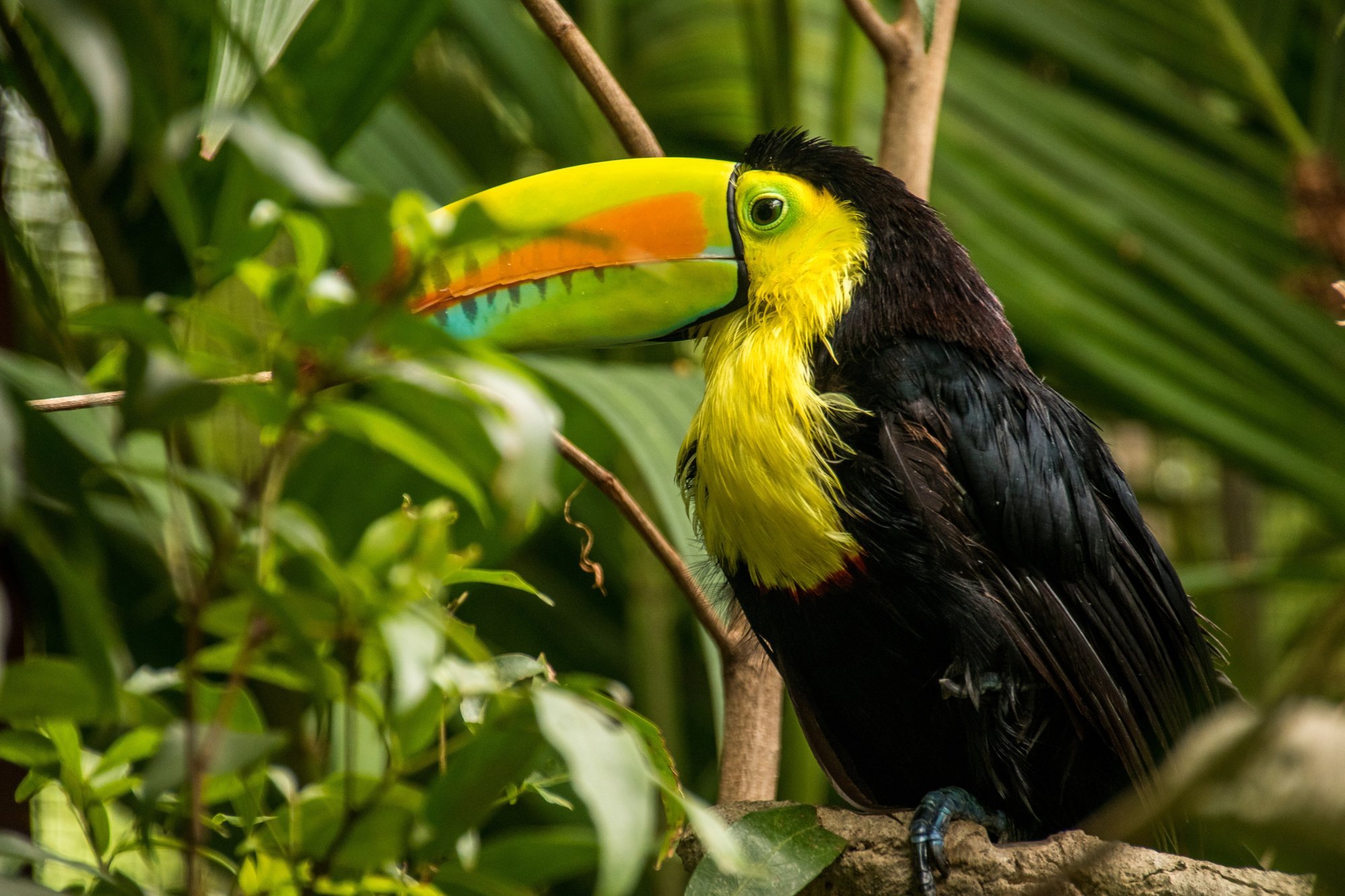
Few animals say “Costa Rica” quite like a toucan. That oversized, colorful bill is on postcards, souvenirs and almost every traveler’s wildlife wish list. But if you are staying in Guanacaste, you may be surprised to learn that wild toucans are far easier to find in the country’s humid rainforests than in the tropical dry forest of the northern Pacific coast.
Here is the good news: near Playas del Coco, you can see toucans up close, and learn their stories, at the Animal Sanctuary of Diamante Eco Adventure Park. The toucans who live here were rescued from illegal pet keeping or smuggling and cannot safely return to the wild. This is their story, and how to visit them responsibly.
Where Can You See Toucans in Guanacaste?
Costa Rica is home to six members of the toucan family: the keel-billed toucan, the yellow-throated toucan (including the chestnut-mandibled form), the collared aracari, the fiery-billed aracari, the emerald toucanet and the yellow-eared toucanet. Most of them are birds of humid lowland and mountain forests.
Guanacaste’s dry forest is a different ecosystem, and wildlife guides note that toucans live in much higher numbers in the rainforest. You might get lucky on a nature walk, but if toucans are high on your family’s list, the most reliable way to see them near the Gulf of Papagayo is Diamante’s Animal Sanctuary in Playa Matapalo.
Meet Diamante’s Toucans
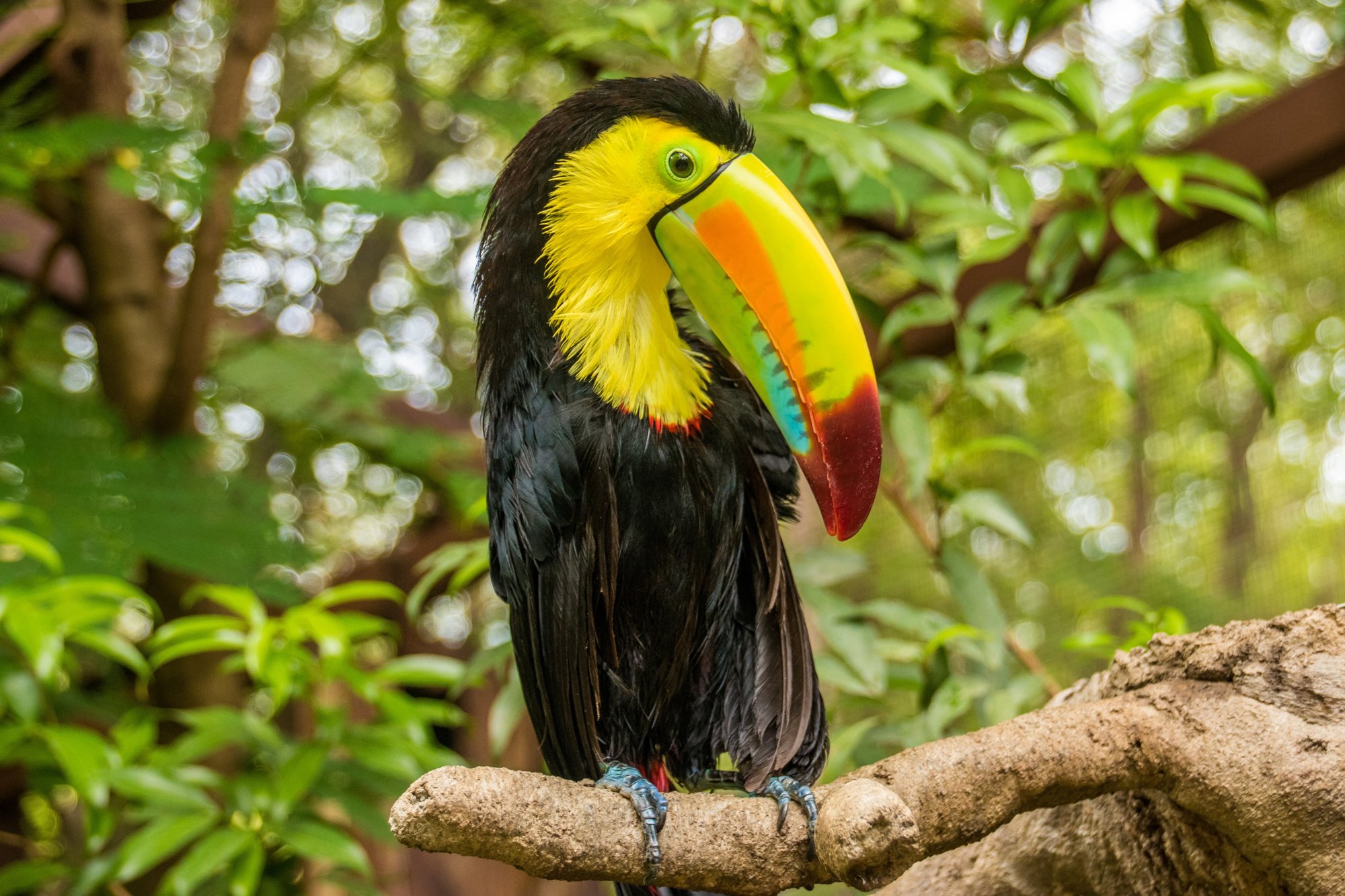
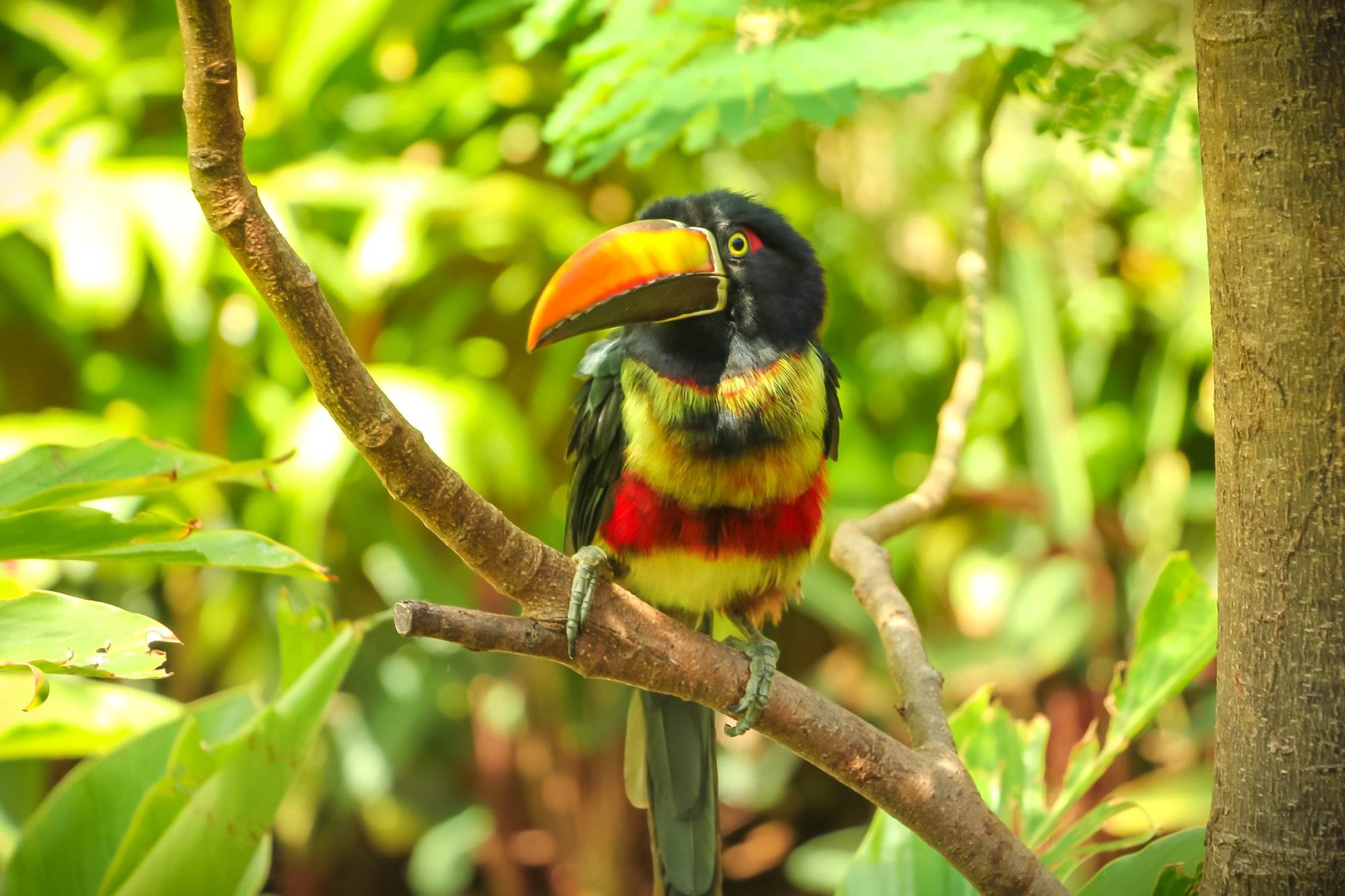
At Diamante, guests can meet three types of toucans: the rainbow-billed (keel-billed) toucan, the chestnut-mandibled toucan and the collared aracari. You can learn more about them on our Toucan Fun Facts page.
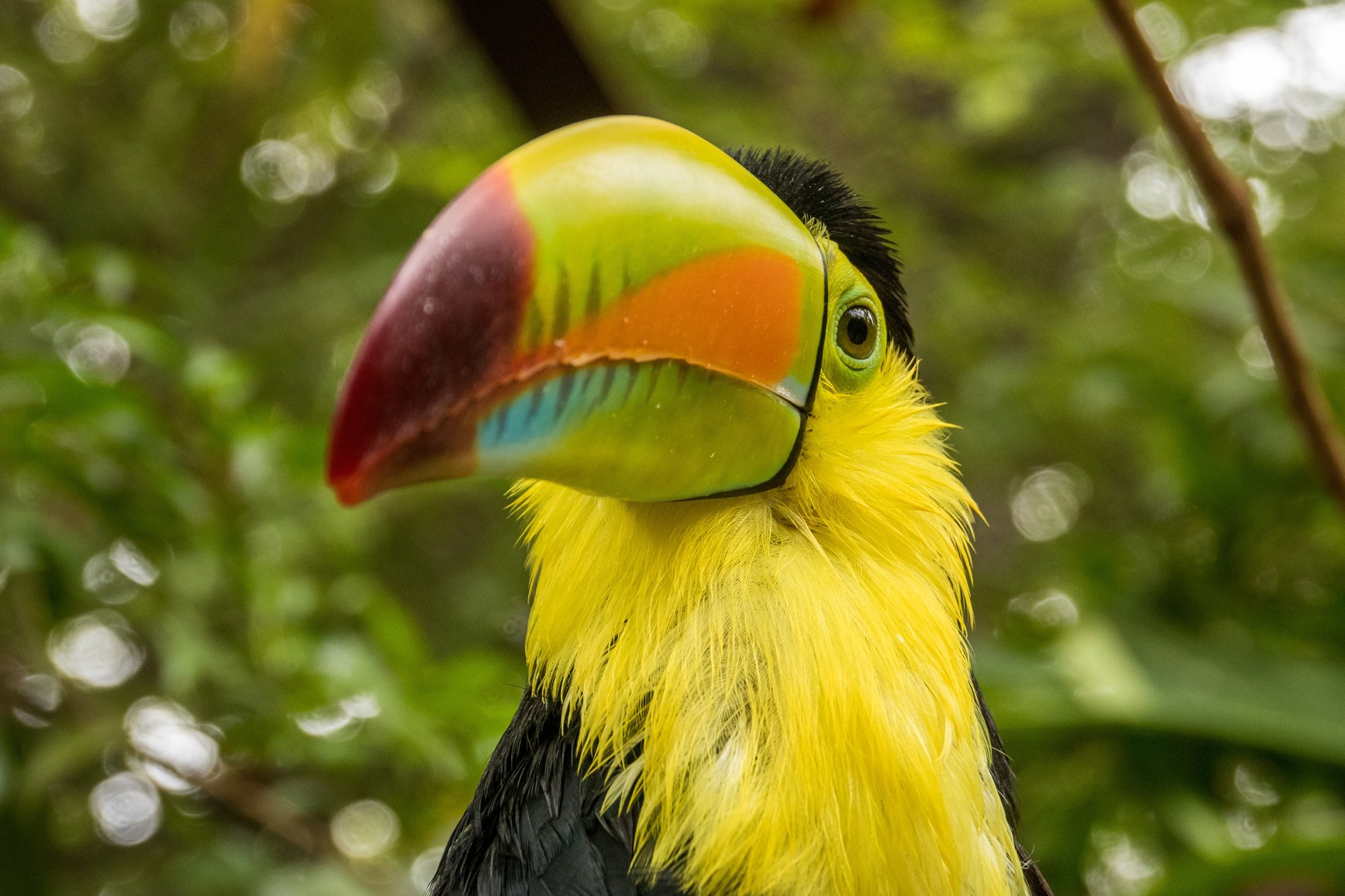
- Franco is a keel-billed toucan, also known as the rainbow-billed toucan. His mostly green bill with orange sides and a red tip is the classic toucan look.
- Bob, Dylan, Ronaldo and Messi are four yellow-throated toucans (and yes, two of them share their names with two famous footballers). This is a large toucan with a bright yellow throat and a loud, yelping call often written as “Dios te dé.”
- The collared aracari is a smaller member of the family, with a yellow chest, dark feathers and red markings. In the wild, aracaris often move through the forest in small groups.
Why Can’t Rescued Toucans Be Released?
Every toucan at Diamante arrived after being kept illegally as a pet or caught in an attempt to smuggle it out of Costa Rica, and was confiscated by SINAC, the government agency in charge of Costa Rica’s wildlife. Diamante’s sanctuary is not a release center. Animals arrive through SINAC and other Costa Rican environmental authorities, and Diamante’s role is to provide professional, long-term care for animals that have been determined unable to return safely to the wild. The sanctuary works with professionals in biology and veterinary medicine under the technical and legal supervision of SINAC.
In general, a toucan may not be releasable for several reasons. Birds kept as pets often miss the chance to learn from their flock how to find food, recognize predators and interact with other toucans. Some arrive with injuries or damaged feathers that affect flight. Others have become too used to people to survive on their own.
Toucans are social birds that usually travel in small groups, which is part of why a life alone in a cage is so hard on them. At Diamante, they live in habitats designed to reflect their natural environment, where you can spot them hopping between branches and calling to each other. With their short legs, toucans don’t really walk: they hop.
What Do Toucans Eat?
Toucans may look like fruit specialists, but they are omnivores. In the wild they eat a mix of fruit, insects, small lizards and even the eggs of other birds.
That famous bill looks heavy, but it is made of keratin, the same material as human nails and hair, and filled with tiny air pockets that keep it light and strong. It works as a precise tool for grabbing and handling food, including fruit at the very tips of branches.
At Diamante, the residents are cared for by a specialized team of biologists, veterinarians and nutritionists, and every animal eats a veterinarian-approved, formulated diet. That is also why guests should never share food with the animals: human food can make them sick.
Enrichment: Keeping Curious Minds Busy
Enrichment means changing an animal’s surroundings, food or routine so it can use natural behaviors such as foraging, exploring and problem-solving. In zoos and sanctuaries, enrichment for birds like toucans often means fruit presented in a new way, tucked into natural materials or hung from branches so the bird has to work a little for its reward.
Enrichment is part of the animal care that every Diamante pass helps fund, and enrichment moments are a great chance to see the animals active and curious. Ask the sanctuary’s biologists during your visit what is planned for the day, and follow @diamanteadventure on Instagram for sanctuary moments and enrichment highlights.
How to See the Toucans Up Close, Responsibly
You can visit the toucans with any Diamante pass that includes the Animal Sanctuary:
- Discovery Pass: about 2 hours, all ages. From $45 for adults (11+) and $38 for children ages 5 to 10.
- Cultural Experience Tour: sanctuary access plus coffee, cacao and sugarcane traditions. From $58 for adults and $48 for children.
- Diamante Adventure Pass: the full day, with zipline, sanctuary, culture, beach and lunch. From $125 for adults and $98 for children.
The sanctuary walk is self-guided, and more than a dozen licensed biologists are available to answer questions. A few tips for a great visit:
- Slow down and listen. Toucans often announce themselves before you spot them. Keel-billed toucans make a deep call that sounds a lot like a croaking frog.
- Turn off your flash. Flash photography is not allowed in the sanctuary.
- Never feed the animals or cross barriers. Diets are carefully planned, and barriers protect both you and the animals.
- Keep kids close. Children 15 and under must be supervised by an adult.
- Bring a zoom lens if you have one. The best toucan photos come from patience, not from getting closer.
- Ask about each bird’s story. The biologists know every resident, and their stories are what make the visit memorable.
How Your Visit Helps
Every visit supports the long-term care of Diamante’s rescued animals: each pass helps fund animal care, enrichment, habitat improvements and environmental education programs. It also spreads a message the sanctuary shares with every guest: animals are not pets; they are ambassadors for conservation. You can read more about this work on our sustainability page.
Costa Rica’s toucans are not considered endangered, but their future depends on healthy forests and on people refusing to buy wild animals. In Diamante’s 10th anniversary year, that message matters more than ever.
Who Is This For?
- Families whose kids have “see a toucan” on their Costa Rica list.
- Bird lovers and photographers staying in Guanacaste.
- Travelers looking for wildlife experiences that support rescue and conservation.
- Beach vacationers who want to add a two-hour wildlife visit to their trip.
Planning more wildlife moments for your trip? Check our Costa Rica Animal Bucket List and learn what makes Diamante’s Animal Sanctuary different.
Come Say Hello
Franco, Bob, Dylan, Ronaldo and Messi can’t go back to the forest, but they can help thousands of visitors understand why wild animals belong there.
Book your Discovery Pass, bring your curiosity and listen for the croak. Want the full day? The Diamante Adventure Pass adds the zipline, culture, beach and lunch.
Frequently Asked Questions
Can I touch or feed the toucans?
No. To protect the animals, guests may not feed them, cross barriers or use flash photography. You can watch them up close from the visitor paths.
Are toucans endangered in Costa Rica?
Costa Rica’s toucans are not considered endangered, but they face threats from habitat loss and illegal capture for the pet trade.
Is it legal to keep a toucan as a pet in Costa Rica?
No. Costa Rica’s Wildlife Conservation Law prohibits removing wildlife from nature. The toucans at Diamante were confiscated from illegal pet keeping or smuggling.
Can I see wild toucans in Guanacaste?
It is possible, but toucans are much more common in Costa Rica’s humid rainforests than in Guanacaste’s dry forest. The sanctuary is the most reliable place to see them near Playas del Coco.
How long does a sanctuary visit take?
Plan about 2 hours with the Discovery Pass. The sanctuary is also included in the Cultural Experience Tour and the full-day Diamante Adventure Pass.
What is the best time to see the toucans?
Mornings are cooler and more comfortable for walking the sanctuary. Ask the sanctuary biologists when you arrive whether any enrichment activities are planned that day, since they are a great time to see the animals active.
What other animals live in the sanctuary?
Two-toed sloths, jaguars, pumas, monkeys, Baird’s tapirs, crocodiles, frogs, snakes, butterflies and more.